Free times tables games help children learn multiplication facts by turning repeated practice into short, interactive challenges. The most useful games begin with one multiplication table, provide immediate feedback and gradually introduce mixed questions from 1 to 12.
Parents and teachers should choose activities based on the child’s current accuracy rather than selecting the fastest or most colourful game. A child who is still learning 6 × 4 needs focused practice, while a child who already knows the facts may benefit from quizzes, timed rounds or problem-solving tasks.
For a broader selection of numeracy activities, explore our math games for children, or use the times tables games guide to build a structured multiplication routine.
What free times table games are best for kids?
The best free times table games for kids match the child’s current multiplication level and give clear feedback after every answer. A useful game should help children notice mistakes, repeat difficult facts and improve recall without turning every session into a speed test.
Younger learners usually benefit from visual matching, number groups and single-table activities. Older children can move towards mixed multiplication questions, missing-number challenges and short timed rounds.
A common mistake is choosing a game that is too difficult because it appears more advanced. When a child misses most questions, the activity becomes guessing rather than learning.
Start with a table the child partly understands, such as the 2, 5 or 10 times table, and aim for accurate answers before adding pressure.
For example, a child who answers 8 out of 10 questions correctly may be ready for a slightly faster round. A child who answers only 3 correctly needs slower practice, visual support and repeated exposure to the same facts.
Parents should also watch for games that reward random clicking. A useful activity requires the child to solve the multiplication fact before progressing.
Entertainment matters, but the learning task must remain clear.
How should children use times table games online?
Children should use online times table games in short, focused sessions that combine accuracy, repetition and gradual difficulty. Ten purposeful minutes are usually more useful than a long session in which the child becomes tired, distracted or frustrated.
A simple routine is to review one table, play a focused game and finish with five mixed questions. This creates a clear beginning, practice stage and final check.
Begin by selecting one multiplication table instead of immediately choosing a mixed challenge. If the child is learning the 7 times table, the first activity should mostly contain 7 × questions.
Once the child answers accurately, add related division facts or mix the 7 times table with a familiar table.
Timed games can help fluent learners, but they can also hide misunderstandings. A child may memorise the screen pattern, click quickly or become anxious when a countdown appears.
Use timed rounds only after the multiplication facts are mostly correct without assistance.
Online practice should also be balanced with spoken and written recall. After the game, ask the child to explain one difficult fact, such as why 6 × 8 equals 48.
This prevents the activity from becoming passive screen time and helps confirm that the answer was understood.
Are free times tables board games effective?
Times tables board games are effective because they combine multiplication practice with conversation, turn-taking and repeated recall. They are particularly helpful for children who feel pressured by digital timers or need more time to think through each answer.
A board game does not need expensive equipment. Paper, dice, counters and multiplication cards are enough to create a useful home or classroom activity.
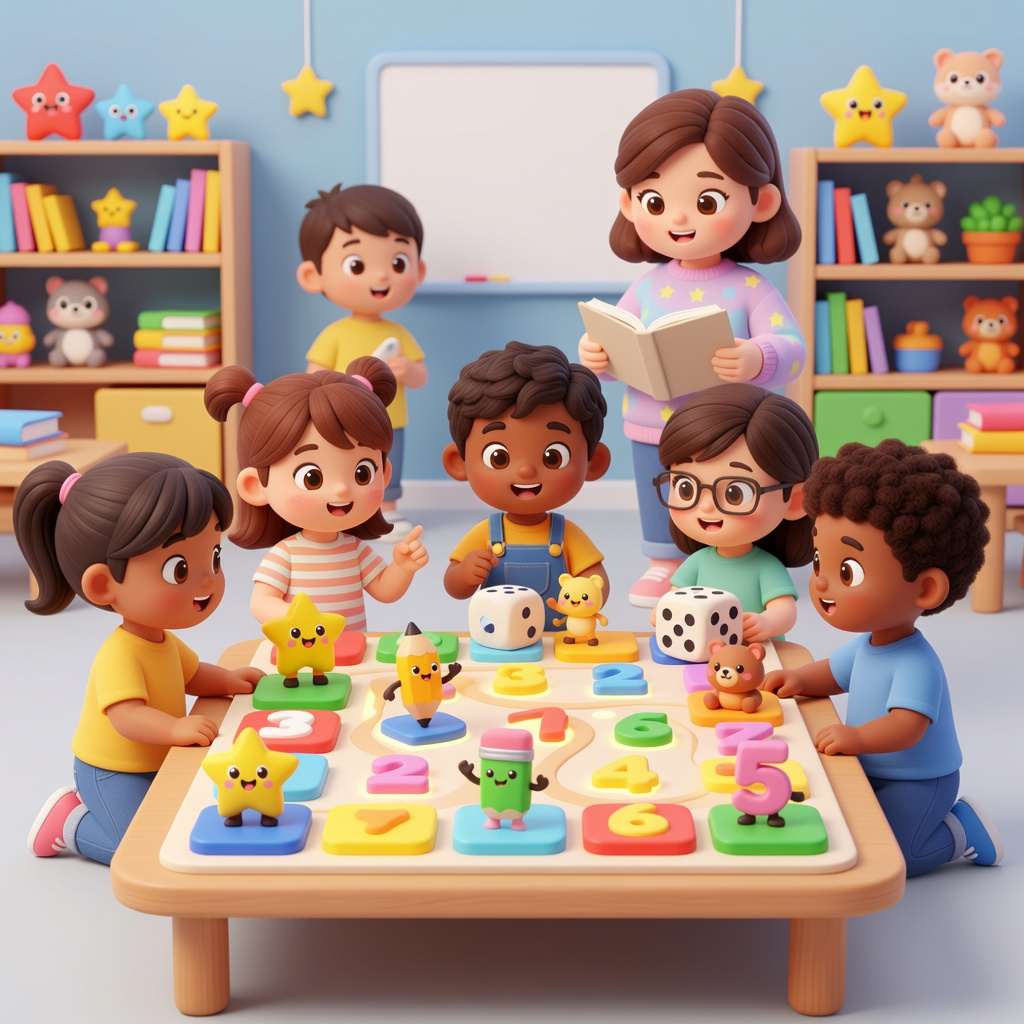
One simple version uses a numbered path. Each player rolls a die, moves a counter and answers a multiplication question before keeping the move.
Another version asks players to match multiplication cards with answer cards. The winner is the player with the most correct pairs rather than the fastest player.
The main risk is allowing stronger players to dominate. When one child answers every question first, other players receive less practice.
Give each player a separate question and enough thinking time. Avoid letting another player shout out the answer.
Board games also reveal how children think. A child may solve 6 × 7 by remembering 5 × 7 and adding another 7.
That strategy is valuable, even if the answer is not immediate. The goal is to move from a correct strategy towards fluent recall without removing understanding.
How can you create a useful free times tables quiz?
A useful free times tables quiz measures both accuracy and recall without making speed the only sign of success. The quiz should begin with familiar facts, include a few challenging questions and show which multiplication tables need more practice.
Use direct questions, missing-number problems and simple division facts to check whether the child understands the relationship between numbers.
| Question type | Example | What it checks |
|---|---|---|
| Direct multiplication | 7 × 6 = ? | Basic fact recall |
| Missing number | ? × 8 = 40 | Flexible understanding |
| Related division | 42 ÷ 7 = ? | Inverse knowledge |
| Word problem | 6 bags contain 4 apples each | Practical application |
Do not give a long mixed quiz to a child who has only started learning one table. That approach produces a low score but offers little useful information.
A better quiz may contain eight questions from the current table and two review questions from earlier tables.
After marking the quiz, group errors by table. If most mistakes involve 7 × 8, 7 × 9 and 8 × 9, the child may need focused work on larger facts rather than another general quiz.
The result should guide the next practice session, not simply produce a score.
Which times table games work well for KS2 pupils?
Times table games for KS2 pupils should combine facts from 1 to 12 with reasoning, division and mixed-question practice. By this stage, children need more than repeated chanting because they must use multiplication knowledge in fractions, area, division and multi-step problems.
Quick-answer games can improve fluency, while missing-number challenges and multiplication grids help reveal gaps in understanding.
A Hit the Button-style activity, where children select the correct answer quickly, can be useful for checking recall. However, it should not be the only activity.
A child may become fast at recognising answers while still struggling to apply the same facts in a written problem.
KS2 learners should practise three situations: isolated facts, related division facts and multiplication inside a problem. For example, after answering 8 × 7, ask the child to solve 56 ÷ 8 and then use the fact to calculate the number of objects in seven groups of eight.
Watch for repeated dependence on counting. If a child calculates 9 × 6 by counting in sixes from the beginning every time, the answer may be correct but not yet fluent.
Encourage shortcuts such as using 10 × 6 and subtracting 6. This builds speed through number relationships rather than pressure.
What mistakes should you avoid when using free times tables games?
The biggest mistake is using free times tables games as entertainment without checking whether the child is learning the intended multiplication facts. A game is useful only when its difficulty, feedback and question type support the learner’s next step.
Other common mistakes include practising too many tables at once, introducing timers too early and repeating easy facts while avoiding difficult ones.
Do not assume a high game score always means secure knowledge. Some activities repeat a small set of questions, use predictable answer positions or allow children to continue after random guesses.
Check learning by asking several multiplication questions away from the screen.
Avoid changing games every day simply because the child becomes bored. Constantly switching formats can reduce useful repetition.
Keep the multiplication goal consistent while changing only one part of the activity, such as moving from matching cards to a short quiz.
Finally, stop before frustration becomes the main experience. A child who repeatedly fails under time pressure may begin to believe they are bad at maths.
Reduce the number of questions, remove the timer and return to one manageable table. Confidence should come from visible progress, not from making the game artificially easy.
Frequently Asked Questions
Here are common questions about times tables games free, helping learners and parents quickly understand the topic and choose the best next step.
What are the best free times tables games for kids?
The best free times tables games give children short, level-appropriate multiplication practice with immediate feedback. Start with one table at a time, then move to mixed questions, timed challenges and problem-solving games after accuracy improves.
Can children play times table games online for free?
Yes, children can use free online times table games to practise multiplication facts, speed and recall. Parents should choose games with clear instructions, suitable difficulty levels and limited distractions rather than selecting a game only because it looks entertaining.
Are times tables board games useful?
Times tables board games are useful because they turn repeated multiplication practice into a social activity. They work especially well for children who dislike timed computer games or need more time to explain how they found an answer.
What is a good times tables quiz for KS2 pupils?
A good KS2 times tables quiz should include facts from 1 to 12, a mixture of direct and missing-number questions, and a manageable time limit. The quiz should be challenging enough to reveal weak tables without making the child guess under pressure.
About MathEng Kids
MathEng Kids creates friendly learning games that help children practice math and English through short, playful activities. Each game is designed to make small learning wins feel fun, clear, and rewarding.
From counting and number recognition to vocabulary and spelling, our learning activities support children as they build confidence at their own pace.